
Applications
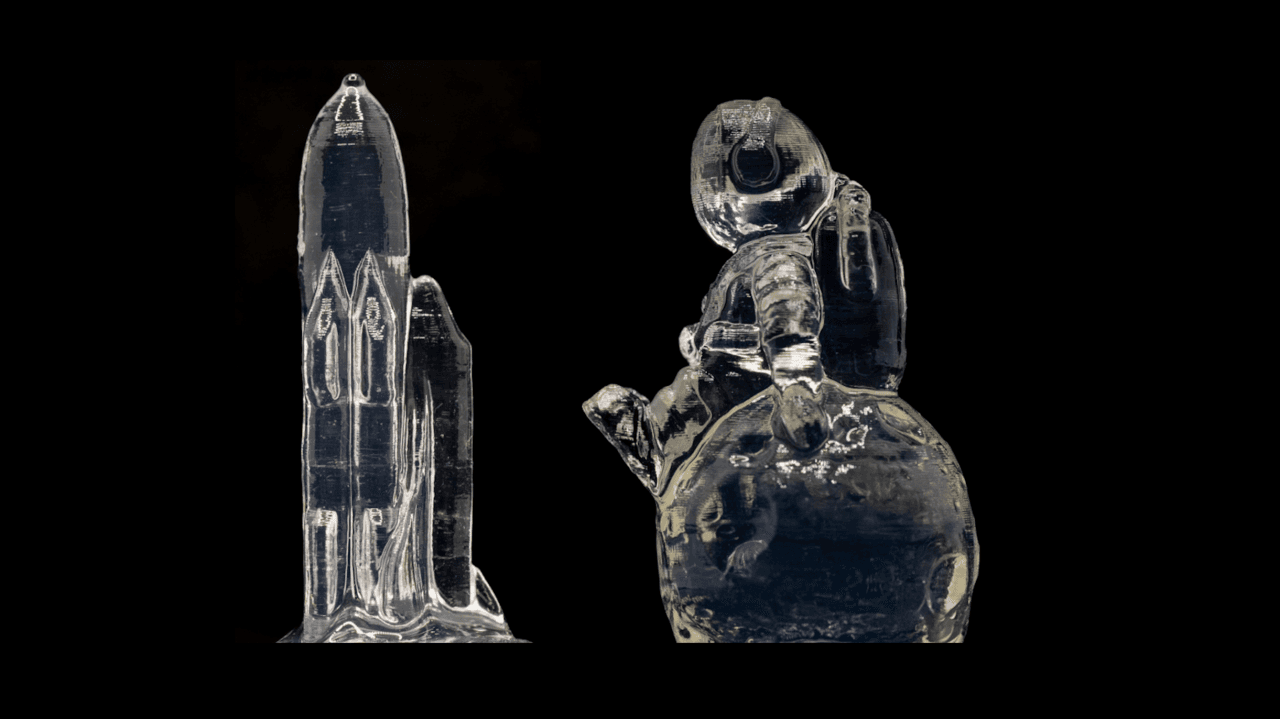
Hydrogels: The Spacesuit of the Future

Sinan Gölhan
Founder & CEO at GelTech Labs
Space isn’t empty.
It’s full of energetic particles moving fast enough to damage electronics and living tissue.
On Earth we’re protected by the atmosphere and magnetic field. Outside of it, astronauts are exposed continuously. Over long missions, especially to Mars, radiation becomes one of the main biological limits of human exploration.
One of the best shields we know against this radiation is actually simple: WATER
Materials rich in hydrogen slow high-energy particles effectively, and water happens to be excellent at this. That’s why space agencies have long considered water as part of spacecraft shielding.
But liquid water isn’t easy to wear in a spacesuit. It moves, leaks, and distributes unevenly. So researchers started asking a different question:
What if we could keep the radiation protection of water… but give it the mechanical behavior of a solid?
Enter hydrogels
Hydrogels are polymer networks that trap large amounts of water inside their structure. They behave like soft solids while retaining the hydrogen density of water.
ESA has explored hydrogel layers for astronaut protection because they can hold water uniformly and remain flexible while still providing shielding. The idea is essentially “solid water armor”.
More recently, researchers have gone further and engineered specific formulations for this purpose. A 2024 study developed poly(vinyl alcohol) hydrogels cross-linked with boric acid designed for space environments.
The material showed several useful properties:
High hydrogen content, which reduces fragmentation of incoming particles
Mechanical strength improvements from the crosslinking
Radiation shielding performance comparable to pure water
Because the gel holds water in a stable network, it combines protection and structural integrity in a way liquid shielding cannot.
Why this is interesting beyond space
This is less about astronauts and more about what hydrogels are becoming.
They’re not just soft biomedical materials anymore.
They’re functional infrastructure materials.
The same properties that help in space are the ones we already use on Earth:
absorbing and storing fluids
maintaining uniform distribution
interacting safely with biology
remaining flexible while performing a function
In medicine they regulate healing environments.
In agriculture they manage water availability.
In space they might become protective barriers.
Same chemistry. Different constraints.
The bigger shift
Historically, shielding meant dense, heavy materials like metals.
Hydrogels flip that idea: protection through composition rather than mass.
Instead of blocking radiation by being hard, they absorb and slow particles because of what they’re made of.
That’s a very different way of thinking about materials — less structural, more functional.
If humans eventually walk on Mars, the protective layer between them and space might not look like armor at all.
It might look like a soft, water-filled polymer.