
Applications
📦 Hydrogels: The Smart Delivery Vehicles of Modern Medicine

Sinan Gölhan
Founder & CEO at GelTech Labs
What good is a life-saving drug if it never reaches the right address?
In drug delivery, it’s not just about what you give — it’s about where, when, and how you deliver it.
That’s why hydrogels are quickly becoming the UPS of modern medicine: programmable, biocompatible materials that carry drugs, biologics, and even cells exactly where they’re needed — and nowhere else.
In this issue, I’ll explore:
Why targeted delivery matters more than ever
How hydrogels outperform traditional carriers
Real-world examples of hydrogel “address-labeling” in action
What’s next for smart, stimulus-responsive delivery platforms
🧠 Why Targeted Delivery Is a Game-Changer
Most drugs don’t fail because they don’t work — they fail because they don’t get to the right place at the right time.
Systemic administration (oral, IV) often means:
<1% of the drug reaches the target tissue
The rest gets metabolized, excreted, or causes side effects elsewhere
Targeted delivery improves:
Efficacy
Safety
Dosing precision
Patient outcomes
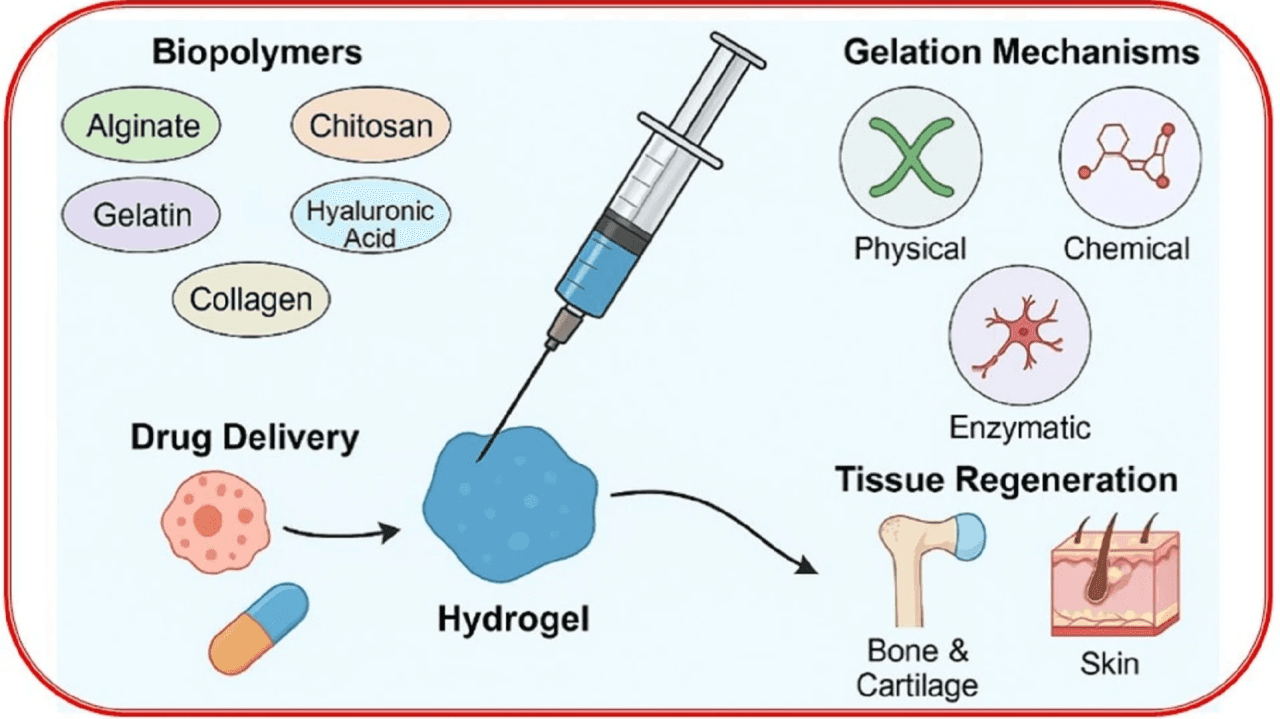
Hydrogels solve this by acting as smart, localized depots that respond to their environment and release cargo on demand.
📦 What Makes Hydrogels Effective Delivery Vehicles?
Hydrogels offer unique advantages over nanoparticles, pills, or injections:
Localizable: Can be injected or implanted directly at disease sites
Biocompatible: Made of water-rich, tissue-friendly polymers
Tunable: Swelling, degradation, and porosity can be engineered to match therapeutic goals
Responsive: Can be triggered by pH, enzymes, temperature, or light
Multifunctional: Deliver multiple agents in staged or synergistic release profiles
In short, they can be labeled with a molecular address and programmed with a delivery schedule.
🧪 Real-World “Hydrogel UPS” in Action
1. Pancreatic Cancer (Locally Delivered Chemo Depot)
A hydrogel developed by the University of California, San Diego delivers irinotecan directly to pancreatic tumors, releasing the drug over 6 weeks and shrinking tumors more effectively than systemic delivery (source).
2. Cartilage Repair (Growth Factor Release)
Hydrogels loaded with TGF-β and IGF-1 release these factors slowly within damaged joints, guiding local stem cell differentiation and cartilage regeneration.
3. Eye Diseases (Subconjunctival Hydrogel Implants)
Instead of eye drops that quickly wash away, hydrogel implants are delivering anti-VEGF drugs or steroids to the retina or cornea with months-long release — improving treatment for glaucoma and macular degeneration.
4. Wound Healing (Peptide-Loaded Gels)
Hydrogels loaded with RDKVYR peptide and antimicrobial agents are being used to target chronic wound environments — accelerating closure and reducing infection (Sood et al., Advanced Wound Care, 2014).
🧬 What’s Next: “Smart” Delivery with Environmental Triggers
The frontier now is stimuli-responsive hydrogels that activate based on local conditions:
pH-sensitive gels that release cargo in acidic tumors or infected wounds
ROS-degradable gels for oxidative stress sites
Enzyme-triggered gels that activate in cancer or inflamed tissue
Light or heat-triggered release for site-specific external control
Researchers are even building hydrogels that “learn” — using AI-designed networks that adapt their degradation based on feedback loops.
⚙️ Where We Fit In
At GelTech Labs, we’re building tools to characterize, optimize, and validate these advanced delivery systems — measuring swelling, degradation, and release behavior under realistic conditions. Whether you’re developing a local cancer therapy or a regenerative gel, how you test will define whether your technology works in the real world.
Final Word
The future of drug delivery isn’t one-size-fits-all. It’s targeted, timed, and tissue-specific.
Hydrogels are emerging as the perfect couriers for modern medicine — and the innovators who master their design and testing will be the ones who deliver real impact.
📩 sinan@geltechlabs.com 🌐 geltechlabs.com
Follow GelTech Labs for more insights on targeted delivery, biomaterials, and hydrogel testing tools.